How to Plan a Kids' Birthday Party in Dubai: Party Flow, Entertainment and Age-Appropriate Ideas
A beautiful theme, a cake, a mascot, a show and a photographer — but if everything happens in the wrong order, the party can still feel rushed or disconnected. The difference between a collection of services and a well-run celebration is the flow.
A parent may have a beautiful theme chosen, a cake ordered, a mascot booked, a show confirmed, food arranged, games planned and a photographer lined up. On paper, the event looks complete. But if the mascot arrives while children are still eating, the show finishes just as the food is cold, and the cake moment happens while a third of the guests are in the bathroom, the celebration can still feel rushed, noisy, and disconnected.
The difference between a collection of services and a well-run party is the flow.
A successful event considers the age of the birthday child, the ages of the guests, arrival behaviour, attention spans, energy levels, food and cake timing, show placement, photography, venue size, parent expectations, and the total length of the event. These are not incidental details — they are the architecture of the celebration.
Kids Hub plans the whole journey. Not each element separately. When the team understands the child, the venue, the guest group and the brief, the result is a celebration that feels purposeful — not just fully booked.
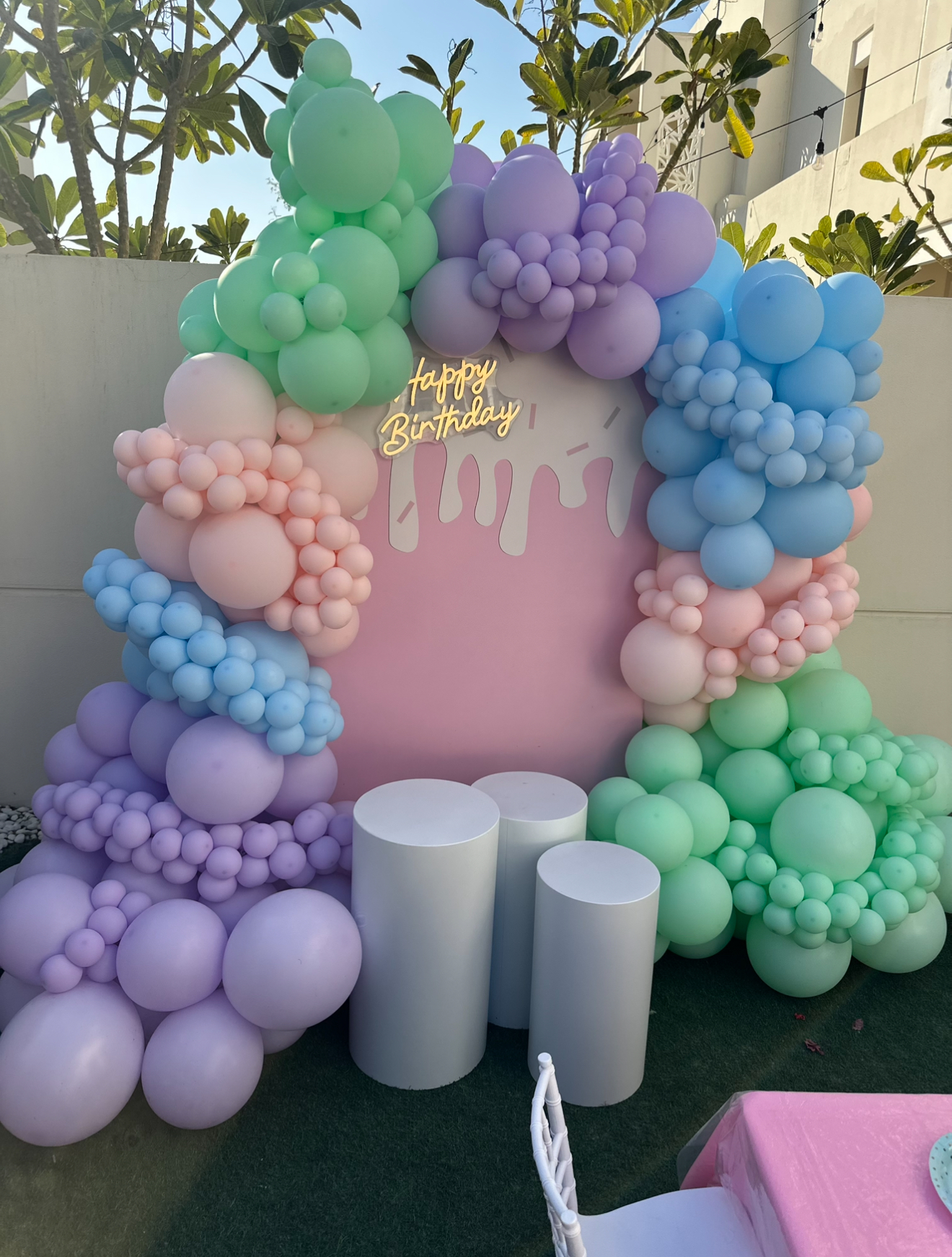
What is party flow?
Party flow is the planned sequence of moments from the first guest arriving until the final goodbye.
A complete event flow may include: guest arrival and welcome; settling-in or open play; a low-pressure warm-up activity; a group gathering; animator-led games; a mascot or character appearance; a main show or workshop; food and drinks; the cake moment; photographs; a calmer closing activity or free play; goody bags and departure.
The order can change — and often should. A good flow depends on the child's age, the venue, the length of the event, the number of children, the number of entertainers, whether food is served, whether there is one show or several, whether the event is indoors or outdoors, and whether adults are also part of the program.
The one thing that should not change is this: children should not spend long stretches waiting for the next activity. Waiting is where energy turns to restlessness, restlessness turns to noise, and noise makes it harder for the next activity to land.
Why the child's age should shape the entire party
What works for a one-year-old will not work for a three-year-old. What excites a six-year-old may feel too intense for a toddler or too simple for a ten-year-old. Age is not a rigid category — every child is different — but it is the most useful starting point when designing a party flow.
The following age guidance is flexible planning advice, not a fixed set of rules.
First birthdays and very young guests
A first birthday is often as meaningful for the family as it is for the child. The parents are celebrating a milestone. Extended family may have travelled. Photographs matter enormously. The baby, meanwhile, may be delighted for twenty minutes and then need a nap.
First birthday priorities often include comfortable surroundings, family photographs, calm arrival time, short activity moments, sensory or messy-play elements, bubbles, gentle music, and a soft mascot appearance that is introduced gradually rather than suddenly. The mascot should not approach a nervous baby quickly. Many families use the mascot mainly for photographs, with the character introduced from a distance first.
Long, loud or complicated stage programs are rarely the right choice. A first birthday is typically better served by a relaxed, unhurried flow that leaves room for feeding, naps, sibling management and the kind of family photographs that will still matter in ten years.
Parties for two- and three-year-olds
Two- and three-year-olds respond well to repetition, familiar songs, simple movement games, bubbles, dancing, colour-based games, short mascot moments, and sensory or craft activities. Their attention span is real but limited — roughly ten to fifteen minutes per structured block before they need to move or reset.
Games should have simple instructions. There should be no elimination — being told to sit out does not land well at this age. Transitions should be quick, encouragement should be generous, and the overall balance should lean toward guided entertainment with plenty of free movement woven in.
A possible flow for this age group: twenty to thirty minutes of arrival and play; twenty minutes of simple animator-led games; ten to fifteen minutes of mascot dancing and photographs; food; cake; short final activity or free play. This is an example only. Actual timing depends on the package, venue, guest group and chosen entertainment.
Parties for ages four to six
Children aged four to six are usually ready for a more structured program. They can follow rules, take turns, and participate in group games with genuine enthusiasm. Treasure hunts, parachute games, Freeze Dance, Floor Is Lava, musical games, mini quests, slime making, arts and crafts, magic shows, bubble shows, face painting and simple science demonstrations all work well in this range.
The animator still needs clear instructions and quick transitions — but the group can generally hold focus longer and participate more independently. A possible structure: arrival and play; group introduction; animator games; main show or activity; food; cake and photographs; final dance or free-play period.
Parties for ages seven to twelve
Older children notice quickly when an activity feels too young. They want real challenge, real participation, and entertainment that respects their confidence. Quest games, team challenges, advanced interactive games, magic, science, Tesla, Cryo, Chemical, bubble and fire performances (where officially offered and venue-approved), slime workshops, creative workshops, glow-in-the-dark experiences, competition-style challenges and music and dance can all work well for this age group.
Technical shows — Tesla, Cryo, Chemical, science — require separate confirmation for age suitability, venue suitability, safety requirements and space. They are not interchangeable. Each has its own requirements, and none should be assumed suitable without the provider's confirmation for a specific venue and group.
Party host, animator and mascot — what is the difference?
These three roles are sometimes confused, sometimes used interchangeably, and occasionally treated as the same job. They are not. Understanding the difference helps parents make a better decision about what their event actually needs.
The party host or event coordinator
The party host manages the overall experience. They are not necessarily the main performer — their job is to make sure the celebration runs according to plan. Responsibilities may include greeting the family, monitoring the schedule, coordinating suppliers, announcing transitions, communicating with the animator, timing food and cake, coordinating the photographer, monitoring when the mascot enters, checking that the show starts on time, helping parents understand what happens next, and adjusting the flow when children need more or less time than anticipated.
A good host is the person who notices that the food is running ten minutes late and quietly adjusts the mascot timing so the cake moment does not overlap. Most guests never notice this happening. That invisibility is the point.
The professional animator
The animator actively leads the children. They run games, lead dances, keep children together, explain activities, encourage shy children, manage transitions, create excitement, maintain group attention, adapt games according to age and energy, and support the cake or mascot moment when it arrives.
A professional animator does considerably more than wear a costume or follow a fixed script. They need voice control, timing, genuine group awareness, and the ability to adapt when twenty-five five-year-olds decide they want to play something completely different.
The mascot or character
The mascot provides a recognisable visual moment — character interaction, dancing, photographs, a surprise entrance, a themed cake moment, short participation in games. The mascot's power is visual and emotional. Children see their favourite character, and the moment becomes something they talk about.
A mascot should not usually be expected to run the entire party alone. The costume limits communication, and explaining game rules from inside a full character suit is genuinely difficult. The most effective approach combines: the animator communicating clearly with the children, the mascot performing visually, and the host protecting the schedule.
Choosing the right show for the party
The most expensive or dramatic show is not automatically the best choice. The right show depends on the age of the children, the guest count, the venue size and ceiling height, indoor or outdoor conditions, sound restrictions, safety rules, event duration, whether children need to watch or actively participate, and what other activities are already planned.
Interactive entertainment
Interactive entertainment keeps children as active participants rather than an audience. This includes professional animators, interactive games, quest games, dancing games, treasure hunts, parachute play, glow-in-the-dark activities and mascot programs.
Game examples include: Red Light Green Light, Freeze Dance, Musical Chairs adapted inclusively, Floor Is Lava, Parachute Game, Guess the Cartoon Song, Charades, Simon Says, Limbo, hula-hoop challenges, ring toss, tug-of-war and Treasure Hunt. Not every game is appropriate for every age or group size. The animator shapes the selection in real time.
Performance shows
Performance shows are staged programs with a clear beginning and end. Kids Hub's current options may include Magic, Bubble, Bubble with Fire, Science, Chemical, Cryo, Tesla, Cotton Candy, Paper Party, Pillow Show, Mini Zoo and other specialist programs. Availability, age suitability and venue requirements must be confirmed for each event.
Magic Show — often works well for mixed-age groups where children can see and participate in simpler moments. Good for seated or semi-seated audiences.
Bubble Show — visually engaging with a broad age appeal. Different formats suit different group sizes; confirm the program version.
Science or Chemical Show — better suited to children ready to follow demonstrations and instructions. The curiosity and focus required makes this a stronger choice for older groups.
Tesla Show — a high-impact visual option requiring confirmed venue, technical suitability and age review. Not appropriate for all spaces.
Cryo Show — a specialist spectacle that must be coordinated with the provider's requirements and event environment.
Paper Party — high-energy and visually exciting. Timing is important: cleanup and the overstimulation that follows a paper burst should be planned for before scheduling the cake moment immediately after.
Bubble with Fire — only where officially offered, professionally delivered and specifically approved for the venue.
Hands-on workshops and creative activities
A well-timed workshop can be one of the strongest elements in a party flow. Children participate directly, the activity creates a natural pause, and they may take home something they made. This suits groups that prefer creating over watching, and it gives the animator or host a clear, structured block in the schedule.
Current options may include slime making, messy play, play dough, gypsum painting, canvas painting, mask making, bracelet making, sword crafting, arts and crafts, tote-bag painting, cup or cookie decoration, planting workshops and other approved creative activities.
Practical considerations include table space, seating, water access, aprons, cleanup time, age suitability, and whether completed work needs to dry before being packed. These should be discussed during planning, not resolved on the day.
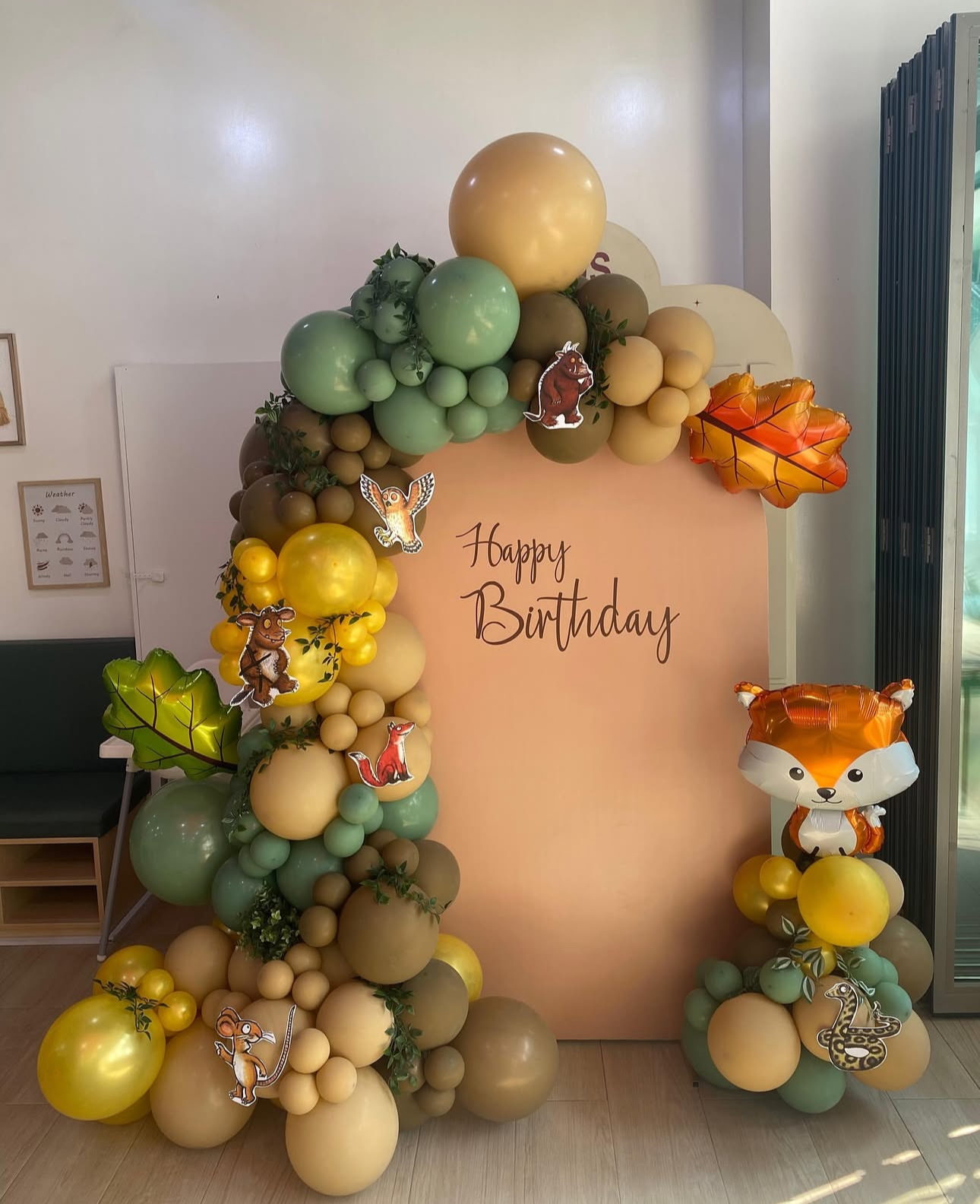
Where should the main show sit in the party flow?
There is no single correct answer, but there are clear trade-offs worth understanding.
Before food: Useful when children arrive with strong attention and the show needs focused engagement. Works when the food will not deteriorate and the venue can transition smoothly.
After food: Can work when children need a calmer seated period first, but the team should allow genuine time to finish eating. Starting a Tesla show while half the children are still holding chips rarely goes well.
Before cake: Builds energy toward the cake moment. Strong when the show has a natural peak that leads into the singing and candles.
After cake: Can work as a final highlight, but some guests may leave earlier than expected at younger parties.
The team considers arrival patterns, whether guests tend to arrive late, child energy at that point in the event, food temperature and service timing, photographer availability, mascot scheduling, venue deadlines, whether the show creates mess that must be cleared before food is served, whether children need to be seated, and cleanup requirements before the cake table can be set.
A two-hour party does not need two hours of nonstop entertainment
This is one of the most useful things to understand when planning a children's event. Nonstop stimulation is not the goal — and it often produces the opposite of what parents want. Children who are overstimulated become harder to manage, less able to participate, and more likely to cry, clash or melt down at the exact moment you wanted a photograph.
A good two-hour celebration might combine: arrival; free play; one structured games block; one main show or workshop; food; cake; photographs; and a calmer close. That is not a sparse event. It is a coherent one.
Children need time to arrive and find their friends, explore the space, eat properly, use the bathroom, take photographs, transition between activities, and rejoin after becoming distracted. A fuller program should not become a rushed checklist where every activity is cut short to fit the next one in.
Sample party flows by age
Every timeline below is an example only. Actual timing depends on the package, venue, guest group and selected entertainment.
Allow extra flexibility for feeding, naps and nervous children.
Which should I choose? A quick comparison
Indoor birthday parties at Kids Hub
Hosting inside Kids Hub means an air-conditioned, fully staffed indoor environment with existing play facilities, defined activity areas, and a team that understands how to coordinate entertainment, food, photography and décor within the space.
Birthday packages at Kids Hub may combine décor, games, meals, cake and entertainment depending on the selected option. There is also the option of an open party — where the venue continues operating alongside the celebration — or a more focused arrangement according to the package chosen.
Kids Hub is able to coordinate multiple celebrations through separate event planning, schedules, assigned teams and clearly managed key moments. Each booking is still planned according to its own package, guest count and entertainment flow. Whether the date includes one party or several, each family's celebration is treated as its own event.
Compare current birthday packages at Kids Hub or explore birthday theme ideas.
Outside birthdays and events
Kids Hub can bring the event experience to private homes, hotels, nurseries, schools, restaurants, other playgrounds, residential buildings, corporate offices, community spaces and other client-selected venues.
An outside event may require separate coordination of décor, balloons, backdrops, furniture, animators, mascots, shows, workshops, food, cake, photography, sound, music, delivery, installation, collection, venue access, power, water and cleanup. For outside events, décor, furniture, entertainment, workshops, food, delivery and other services are quoted separately unless an official custom package states otherwise.
The inside birthday package does not automatically transfer unchanged to an outside venue. Scale, access, setup time, venue rules, equipment transport and crew requirements all change depending on the location. Explore outside event services or build your event step by step using the event builder.
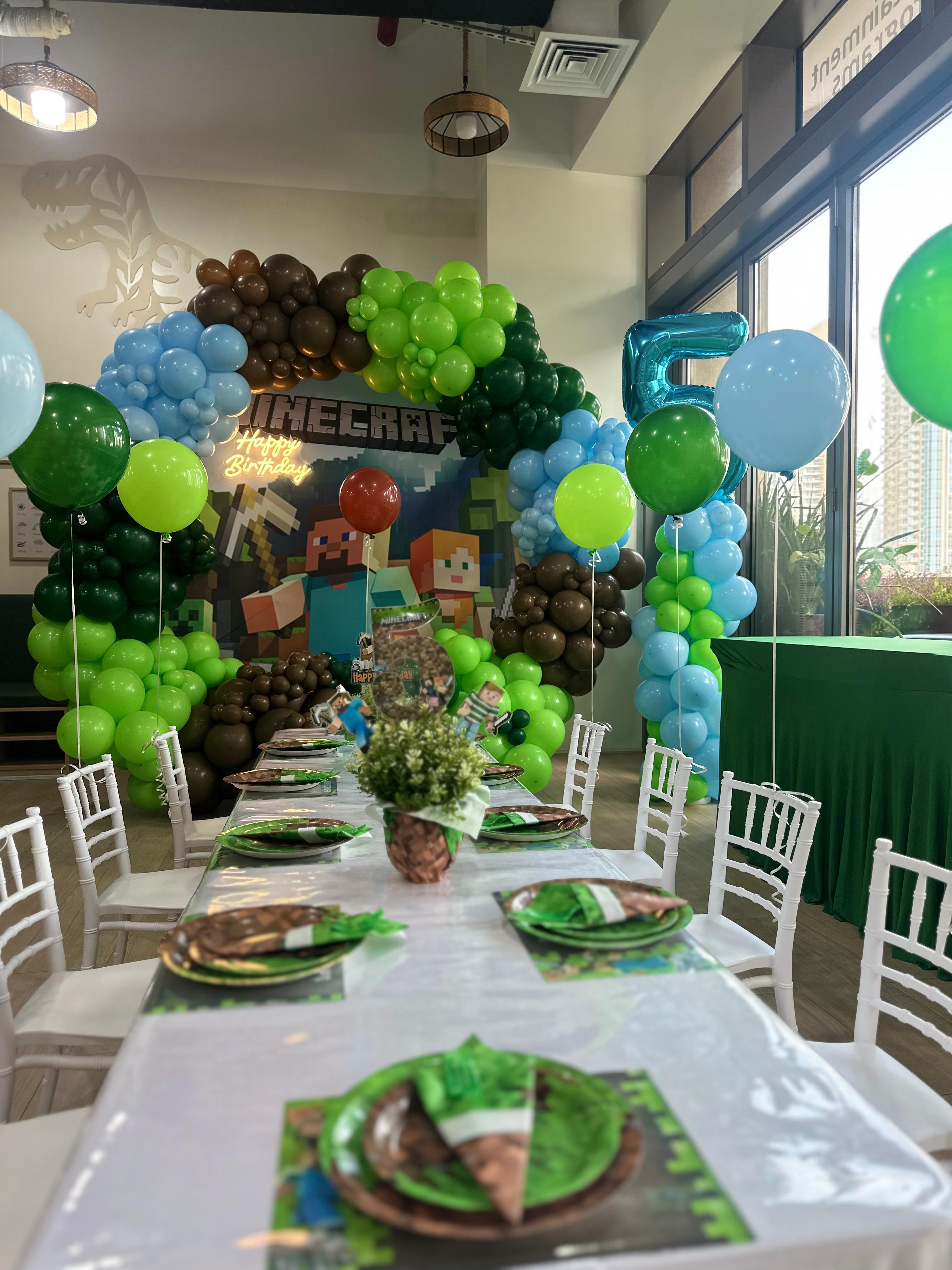
Furniture and practical event setup
A well-run event also depends on the physical setup. Correct-height seating for children, enough table space for workshops, a clear photography angle behind the cake table, and unobstructed movement areas all affect how smoothly an event runs in practice.
Kids Hub can provide or arrange children's chairs, children's tables, adult chairs and tables, table covers, cake tables, display stands, backdrops, seating layouts, workshop tables and food-service tables according to the current inventory and event requirements.
Kids Hub's event inventory includes up to 65 children's chairs, subject to current availability, event date, transport and venue requirements. Furniture requirements should be discussed during the planning stage — not assumed on the day.
Photography, music and production
Larger events may also include professional photography, event videography where officially available, professional music selection, sound equipment, microphones, event announcements, and original Kids Hub music where appropriate. Music should be planned around arrival, game moments, show cues, the cake entrance, background periods, volume restrictions, adult guests and any corporate branding requirements.
For Christmas parties and seasonal events, Kids Hub may also coordinate live performers, including a choir or seasonal vocal program, subject to the event brief, provider availability and venue requirements. This is a custom arrangement — not a standard inclusion in birthday packages.
Professional photography may be included in selected premium packages or added to a custom event depending on current service availability.
Corporate, nursery and community events need a different flow
Not every Kids Hub event is a birthday. Corporate family days, nursery graduations, residential community celebrations, Christmas events, seasonal activations, hotel family programs, public events, brand activations and family festivals each come with their own planning requirements.
A corporate family day may have rolling arrivals, a wider age range, repeated show sessions across a longer period, branded signage, a stage schedule with announcements, more furniture, multiple entertainers and photography permissions to manage. A nursery graduation needs a clear program that communicates achievement without overstimulating very young children. A public community event may require safety boundaries, crowd management planning and a schedule that works for guests joining at different times.
These events may need a program rather than one birthday timeline. The team approach changes accordingly.
How Kids Hub can manage several celebrations
Kids Hub can coordinate more than one party at the playground, an indoor party and an outside event on the same date, several suppliers within a single large event, multiple entertainment blocks, different teams or animators, repeated activities for larger groups, and separate schedules for different age groups within one event.
The ability to run several events comes from planning — not from treating every celebration identically. Each event needs its own brief, confirmed team, schedule, venue requirements and supplier coordination. Current availability and capacity are confirmed when you make your booking enquiry.
What changes when the budget increases?
A higher budget may allow more detailed décor, larger installations, additional backdrops, custom fabrication, more entertainers, multiple shows, longer professional photography, videography, professional sound, live music, more furniture, adult catering, premium cakes and desserts, custom gifts, branded production, stage elements, ceiling décor, extended event management, and additional setup and collection teams.
Current birthday experiences at Kids Hub may begin from approximately AED 1,900. Large custom private or corporate productions may reach approximately AED 65,000 depending on décor, entertainment, furniture, food, photography, music, technical production and venue logistics. This is not a fixed quotation or a promise that every event will fall within that range. Final pricing depends on the selected package, venue, guest count, entertainment, décor, furniture, production and delivery requirements.
But a larger budget should not mean adding activities without purpose. Every addition should support the event flow. And care, planning, communication and attention to detail should not disappear at a smaller budget. Whether a family chooses a starting package or a large custom production, the aim is to understand the child, protect the flow and make the celebration feel personal.
A dream event still needs editing
Some parents or companies want a highly ambitious event — large-scale décor, multiple shows, animators, mascots, workshops, photography, music, furniture, food, cake, branded details, seasonal performers and guest gifts. Kids Hub can help coordinate those elements. But the team will still ask: Does every element have enough time? Is the age group suitable for each activity? Does the venue support the full program? Will children actually participate, or only watch? Is there time to eat? Will one show interfere with another? Is the cake moment protected? Will younger guests need a quieter option while older children are in a louder activity?
The most impressive event is not the one with the longest list. It is the one where the elements work together.
For more on how professional décor and balloon installations are planned and executed, see the article on how Kids Hub creates professional event décor in Dubai.
What should parents or organisers decide first?
Before contacting the team, having a clear answer to the following questions will speed up the planning process significantly:
- Event type — birthday, graduation, corporate, community, seasonal, other
- Child's age and guest age range
- Expected number of children and adults
- Preferred date and venue
- Indoor or outdoor
- Total event duration
- Open or private party
- Theme and preferred atmosphere
- Budget range
- Main entertainment — show, animator, mascot, workshop
- Food, cake and furniture requirements
- Décor and photography needs
- Music or seasonal performers
- Venue access, setup time and collection requirements
The team may recommend fewer, better-timed elements rather than adding everything to the list. That recommendation is part of the service.
Examples shown are based on previous real Kids Hub events. For more recent birthday, entertainment and event examples, visit the Kids Hub gallery or follow @kids_hub_entertainment on Instagram and explore the Birthday, Balloons & Décor and relevant event highlights.
Tell us the age, and we'll help shape the right party flow
Share your child's age, guest count, preferred date, venue, theme and budget range with the Kids Hub team. We'll help you understand which combination of play, animator, mascot, show, workshop, food, furniture and décor may suit your celebration.
Frequently Asked Questions
How long should a children's birthday party last?
Many children's parties run for approximately two to three hours, but the right duration depends on the child's age, venue, guest group and entertainment. Younger children may benefit from a shorter, calmer flow, while older children may enjoy a longer structured program.
What entertainment is suitable for a first birthday?
A first birthday often works best with gentle sensory activities, bubbles, music, family photography, a short mascot appearance and plenty of flexible time. Long or very loud programs may not suit every baby.
What is the difference between a party host, animator and mascot?
The host manages the overall schedule, the animator leads games and interacts verbally with the children, and the mascot creates a visual character experience through dancing, appearances and photographs.
Can Kids Hub organise a birthday outside its playground?
Yes. Kids Hub can plan events at private homes, hotels, nurseries, schools, other playgrounds, residential buildings, corporate venues and selected public locations. Outside-event services are quoted according to the venue and selected requirements.
Can Kids Hub provide chairs and tables?
Kids Hub can provide children's and adult furniture according to the current event inventory. The children's furniture inventory includes up to 65 kids' chairs, subject to availability, delivery, venue and event requirements.
Which shows does Kids Hub offer?
Current options may include magic, bubbles, science, chemical, cryo, Tesla, paper, cotton candy, mascot and animator programs, along with creative workshops such as slime and painting. Availability, age suitability and venue requirements must be confirmed for each event.
Is a mascot enough to run the whole party?
A mascot creates a strong character and photo moment, but an animator is usually better suited to explaining games, communicating with children and controlling the group. Many events combine a host, animator and mascot.
Can Kids Hub arrange a photographer?
Yes, professional photography may be included in selected premium packages or added to a custom event, depending on the current service and event requirements.
Can Kids Hub organise music or Christmas entertainment?
Music, sound support and seasonal performers may be coordinated for selected events. Christmas choirs or live seasonal performances may be arranged as custom options, subject to provider availability and venue requirements. Learn more about Christmas events and kids entertainment in Dubai.
How much does a Kids Hub birthday or event cost?
Current birthday options may begin from approximately AED 1,900. Large custom private or corporate productions may reach approximately AED 65,000 depending on décor, entertainment, furniture, food, photography, music, technical production and venue logistics. The team provides the final quotation after reviewing the complete brief.
Can several birthday parties take place at Kids Hub?
Kids Hub can coordinate more than one celebration through separate schedules, teams and planned event moments, subject to the selected packages, venue operations and confirmed availability.
How do I choose between a show and a workshop?
A show may suit children who enjoy watching and participating in guided moments, while a workshop offers hands-on creation. The best choice depends on age, group size, venue, attention span and the rest of the party flow.